

We are delighted to share a new thinkpiece by FED Learners Council Member, Marshal Ngcongco, on their reflections at the FED Futures December consultation on the future of Maths and Numeracy, in collaboration with White Rose Education. In this thinkpiece, Marshal, a dyscalculic science teacher, reflects on failing maths, returning to education and being invited to a national maths consultation at St George’s House. Drawing on lived experience and stark national data, the piece challenges a system focused on “just getting the grade” and asks whether we’ve lost sight of what maths is actually for. It’s a hopeful, timely call to rethink how maths is taught, supported and understood.
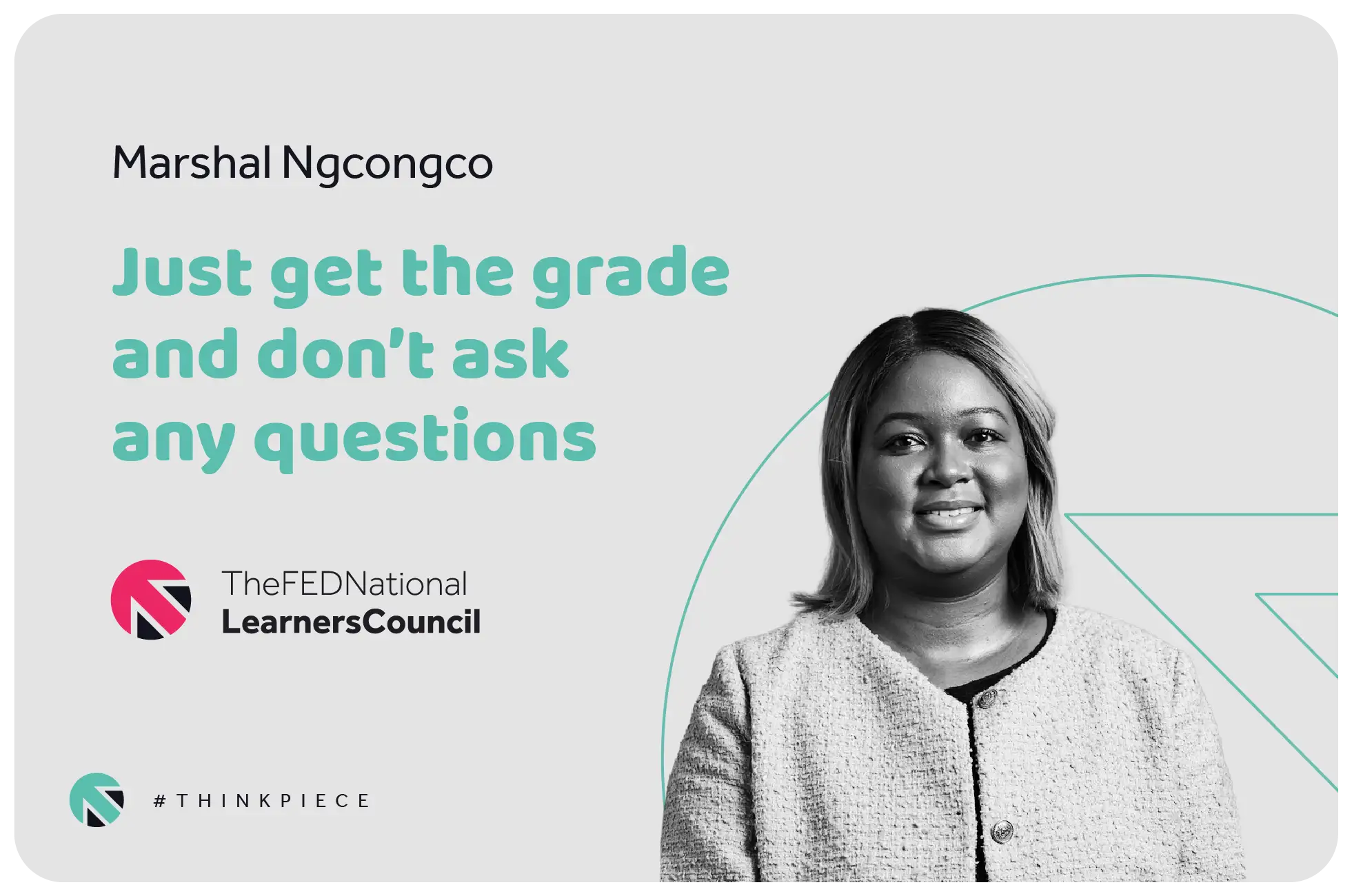
Just get the grade and don’t ask any questions
My name is Marshal Ngcongco I am a dyscalculic science teacher, and this year I was invited to attend a maths consultation at Windsor Castle – words I never thought I would say.
Like many young people, my relationship with maths has been strained from an early age. Despite enjoying school and excelling in other subjects, maths was the one subject I simply could not grasp, a reality reflected nationally, with only 58.2 per cent of students achieving a grade 4 or better in 2025.
Due to a lack of meaningful support for dyscalculia, I failed maths at school. I attempted to navigate life without it and quickly realised that this was not possible. Maths, or more specifically the GCSE version of maths, acts as a gatekeeper to many opportunities. Eventually, I returned to education and achieved the grade. What stayed with me most, however, was not the qualification itself but the experience I gained once maths was no longer a constant barrier. For the first time, I could fully engage in education: taking part in extracurricular activities, building confidence, and genuinely enjoying learning rather than merely surviving it. These experiences have since informed my work to address gaps in numeracy support.
Going into the consultation, surrounded by education and industry experts, I expected my perspective to be unusual. Surely those in the room had all “done well” at maths. What became immediately clear, however, was that we shared a common concern. The issue was not simply whether students were achieving the grade, but a deeper confusion about what was being assessed and why. There was widespread agreement that the purpose of maths itself has become unclear.
Maths is not something we can escape. It weaves itself into almost every aspect of life. What can be changed is how we approach it, as educators, students, and as a society. For too long, maths has been something done to students: something to endure in order to “get the grade”.
The phrase “just get the grade and don’t ask any questions” reflects a system under pressure. Educators are navigating overloaded curricula, limited time, and disengaged learners, often with little opportunity to connect mathematical concepts to real life. When students ask questions that sit outside the narrow scope of assessment, it can feel easier to shut down curiosity than to open it up. Over time, this wears down understanding, confidence, and purpose. As I write this, a few days before Christmas day and less than two weeks before the end of 2025, I feel a genuine sense of hope. Not hope in a vague or wishful sense but hope grounded in intention and shared responsibility. Hope that recognises the scale of change required and the collective effort needed to achieve it. I am hopeful not only for students and educators, but for our country’s relationship with maths in the years to come.